 |
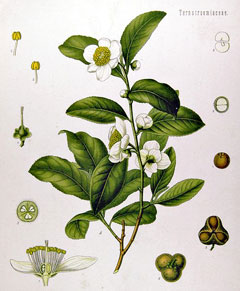
| Camellia Sinensis - Tea Plant. Image from http://www.pfaf.org/user/Plant.aspx?LatinName=Camellia+sinensis |
Tea is drunk throughout the world, in different forms and varieties. Tea as we, westerners, tend to know it is from a plant native to India - Camellia Sinensis.
Interestingly enough, green tea and black tea come from the same plant, they are just prepared differently.
The Japanese Tea Ceremony is a 400 year old tradition originally developed by wealthy merchants who followed the ways of Buddhism. Peace and harmony are created by the careful, smooth movements of the host - who prepares and serves the tea.
Originally it was a ritual that mainly men were interested in, but during the 19th century, when the Western cultures began to have some influence on Japanese culture, the ceremony became very popular amoung women too, and eventually it became a ritual that mainly women were hosts of.
Many people would not think of a british afternoon tea as a tea ceremony, but though it is not as rigidly structured as Japanese ceremonies tend to be, 'Low Tea' is still structured by custom and tradition. It is said that this modern form of afternoon tea was created by Duchess Anna of Bedford, when lighting in wealthy homes became more common, and residences started eating dinner later in the evening. Finding herself faint from hunger in the mid afternoon, the Duchess decided to have a gathering of friends during which food would be consumed and tea would be drunk during this mid afternoon. This light meal was eaten off a low table, similar to our coffee tables these days, and hence became known as Low Tea, as opposed to High Tea, which was the meal eaten by common folk during the late afternoon before it became dark.

No comments:
Post a Comment